

May 18, 2026
Maria Fernanda de Julio
Given the volatility and fast-paced nature of today’s economy, companies are increasingly choosing to cut costs so that they can then invest strategically and achieve the profitability they so desire.
Given this context, this article will help you understand how to achieve operational efficiency by optimizing resources at a lower cost, without compromising quality.
In this article, you’ll also learn about the benefits it offers, as well as its importance for the day-to-day operations of the industry and how it helps companies stand out in the market. Shall we get started?
There are many factors that contribute to a company’s success, and operational efficiency is one of them—especially when we understand its importance on the factory floor. Do you know why?
In industry, this is directly related to costs and productivity. After all, operational efficiency can be defined as the ability to produce while making optimal use of resources and avoiding errors and waste.
In day-to-day operations, it can be calculated based on the ratio of a company’s inputs to outputs, providing insight into how efficiently resources have been used to achieve goals. But what do these terms mean?

The inputs are the activities related to production, as well as the costs, personnel, and time spent. They are primarily reflected in OPEX (operating expenses) and CAPEX (capital expenditures) indicators, among others.
As for the outputs are everything directly linked to the product or service itself, such as revenue and customer satisfaction.
And because this is a basic requirement for any business, each company strategically assesses which operational efficiency metrics make the most sense to track and use to drive improvements. In manufacturing, for example, productivity rates, inventory turnover, and asset availability and reliability are among the key metrics.
Sometimes we get so used to certain problems that they end up becoming part of our routine, and we even make excuses for them: “Oh, it really does take a while,” “It broke, but the technician is on his way to fix it,” “Every month we go a little over budget.”
Taken in isolation, these don’t seem like major problems for an industry, right? But what if we add up these operating expenses and multiply them across all sectors? The result is almost certain to be low profitability.
You know that moment when employees are idle because a bearing has failed? That’s a clear example of two sources of operational inefficiency.

The first is machinery that is idle due to a failure that could have been anticipated and addressed through preventive maintenance. The second is an employee who is idle within the production process as a result of this error.
And what do these two points have in common? COST.
Taichi Ohno, known as the father of the Toyota Production System, used to say, “Costs are not meant to be calculated. Costs are meant to be reduced.”
With this in mind, we would like to emphasize the importance of investing in strategic measures that mitigate or even eliminate these bottlenecks of inefficiency—just as a sugar and ethanol plant did when it avoided a shutdown despite a defect in one of its bearings.
But let’s be honest: We can’t focus on operational efficiency only when we identify its shortcomings, nor can we focus on competitors only when they appear—especially when market trends and competition are emerging at an ever-faster pace.
And this goes beyond operational matters, extending to the corporate strategy of adopting as a guiding principle the understanding that it is absolutely essential to innovate in how we carry out our day-to-day activities and manage our resources and assets in order to achieve a competitive edge and operational efficiency.
Michael Porter, a professor of business theory at Harvard Business School, notes in his article What is strategy?, that operational efficiency and strategy are essential and must go hand in hand to achieve significant performance, even though they function in different ways.

After all, there is no point in making operational improvements if they are not translated into and utilized as competitive strategies.
The combined efforts to motivate employees and gain a deeper understanding of how to manage the execution of specific activities or a set of activities constitute a rich source of insights that directly impact production profitability, resulting in a favorable relative position in terms of costs and a high level of differentiation.
With this combination of operational efficiency and strategy, it is possible to achieve satisfactory results, bringing with them the following benefits:
Generally, strategic planning is based on the company’s current situation to outline long-term actions. Operational planning, on the other hand, is short-term in nature, as it involves constant changes that require flexibility and adaptability to what had previously been established.
For this reason, it is extremely important that they be effective. And this only happens when managers have a broad understanding of processes, costs, shortcomings, and challenges.
Much of what was mentioned in the previous section can be emphasized here, especially because, in addition to having this visibility into what is happening, it is necessary to have accurate and reliable data that demonstrates how effective—or ineffective—operations and processes have been.
As a result, when we have real-time online monitoring of this data, we can also make decisions quickly and avoid unnecessary costs.
Assuming that the planning was effective in its strategies based on rich and consistent data, the next step is to analyze the results obtained to determine whether the planned course is on the right track.
This helps us see that the benefits generated by operational efficiency are, in some way, interlinked. Together, they provide a comprehensive view of the scenarios and an analysis of what is working well and what needs improvement, helping to quantify the performance of machines, people, and their processes.
If you’ve made it this far, you must be curious to know how to improve operational efficiency in the industry. So let’s get started! Check out the three tips we’ve put together below:
1. Invest in technology
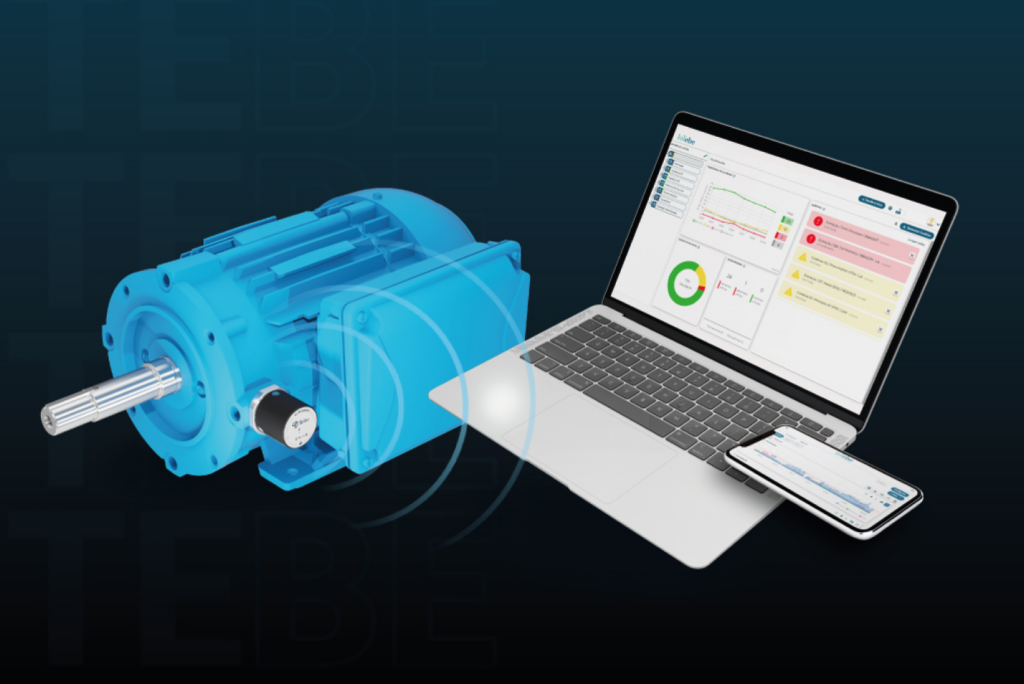
You’ve probably heard it said that even the obvious needs to be stated. And when we talk here about investing in technology, we’re putting that idea into practice.
The use of technology in industry helps automate and manage processes, while also allowing companies to focus their efforts on what really matters: planning and executing strategic initiatives.
Among the many technologies available on the market, monitoring software and vibration sensors make it possible to identify issues such as asset wear and tear, misalignments, and other potential failures and damage, which can then be addressed through predictive maintenance.
They are key allies in making processes more agile and efficient. In addition to the tangible benefits that can be observed and measured on a daily basis—leading to stronger performance outcomes, such as extended equipment lifespan and reduced repair costs—
2. Use data to your advantage
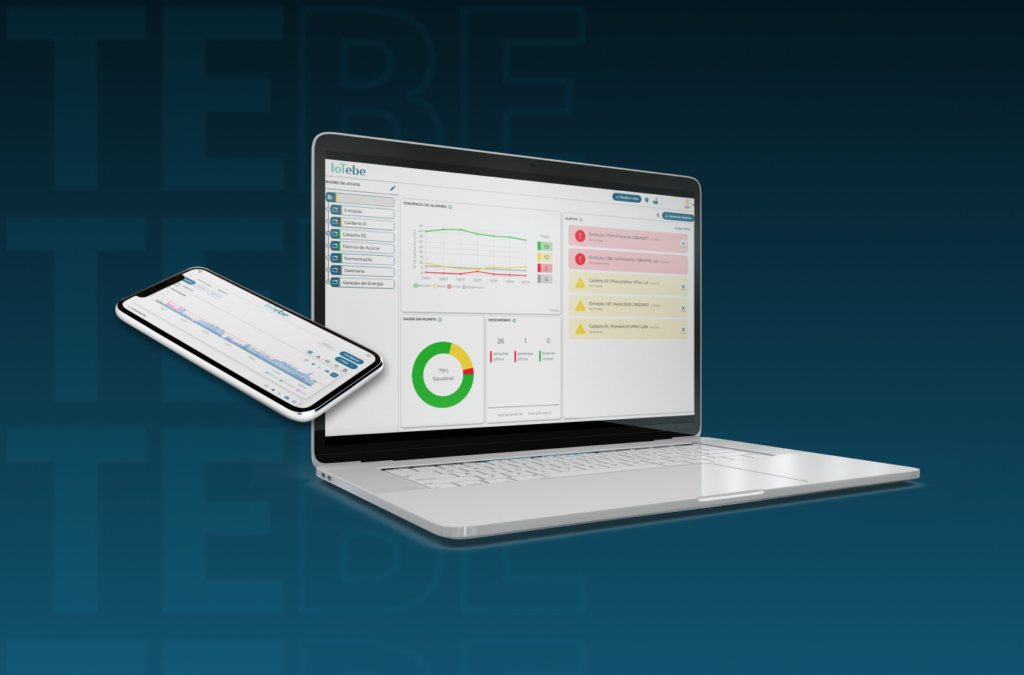
Since we’ve advised you to invest in technology, we also need to point out that it’s pointless if you don’t use the data generated by these and other tools. This information is essential for analyzing scenarios more accurately, implementing process optimizations, and identifying areas that currently require improvements and corrective action.
3. Train your team

From the tips we’ve shared so far, you can see just how interconnected they are, and this one is no exception.
After investing in technology and leveraging the data it provides, we’ve reached one of the most important steps: investing in your team.
In their day-to-day work, they are the ones who will deal with the main situations involving cost bottlenecks and operational inefficiencies, which is why this training and investment are so important.
Therefore, the implementation of all these changes—and the many others yet to come—must be accompanied by employee training strategies, technical support to address any questions, and efforts to foster a culture of innovation within the organizational environment.