
May 18, 2026
Maria Fernanda de Julio
As the new year approaches, it is essential for the industry to stay up to date on emerging technologies and advancements in existing ones.
It is crucial to pay close attention to this information and share it all the way down to the shop floor, as this helps both in the development and implementation of strategic planning, directly impacting competitiveness and improving performance across the entire production line. This, in turn, leads to better deliveries and results.
So, if you want to know what the top tech trends for 2024 are, keep reading this article.
Since the First Industrial Revolution, industry has faced many challenges in an increasingly dynamic, technological, and competitive environment. The advent of the Fourth Industrial Revolution has brought with it a wide range of advanced technologies, such as artificial intelligence, robotics, the Internet of Things, and cloud computing.
The National Confederation of Industry (CNI), which represents Brazilian industry, is discussing the challenges and debates surrounding the future of industry in its strategic roadmap , which has been in place since 2007. The goal is to provide a long-term vision for the development and growth of Brazilian industry, identifying the key factors that affect its competitiveness.
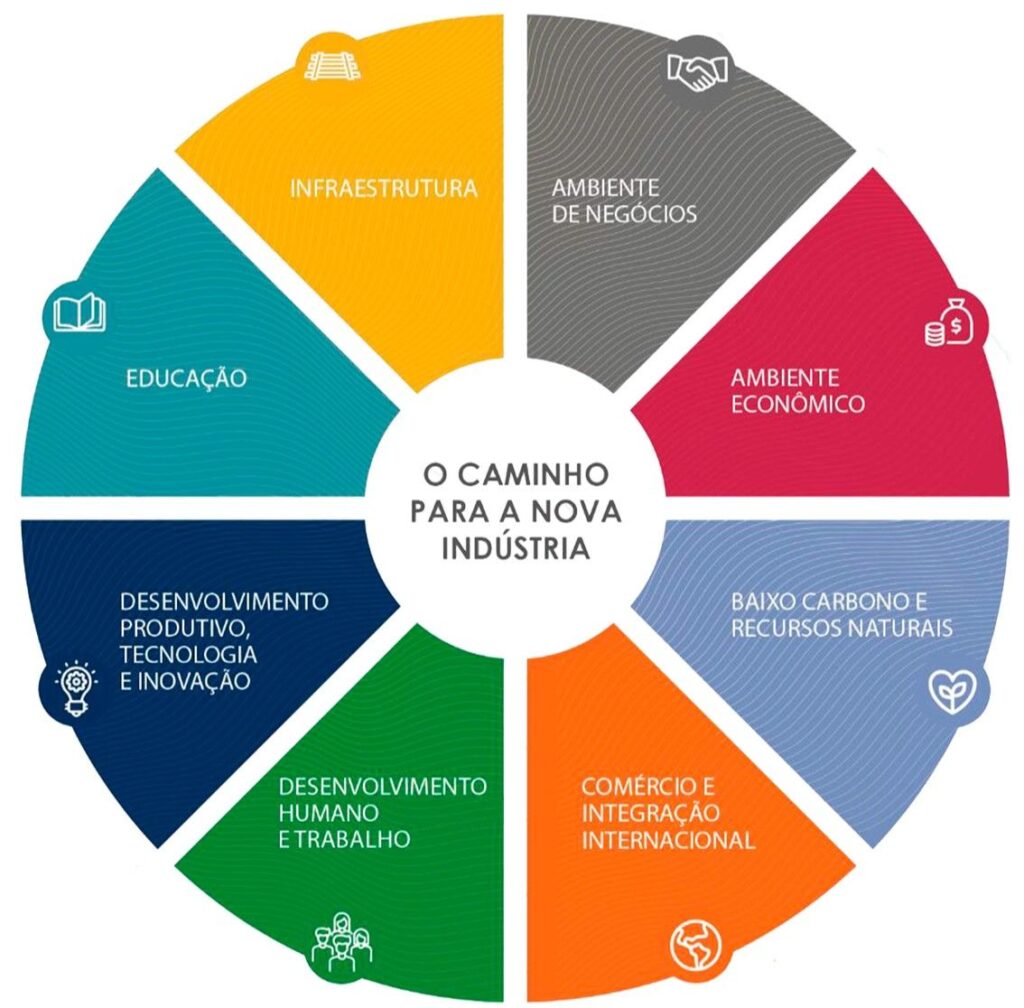
This document outlines the priority areas that will guide the ideal industry. For each area, it sets out objectives, indicators, and targets to be achieved by 2032, which indicate the direction in which the industry wants these indicators to evolve over the course of the decade.
The 2023–2032 Strategic Plan identified eight key factors (Business environment, Economic Environment, Low Carbon and Natural Resources, Trade and International Integration, Education, Human Development and Labor, Productive Development, Technology and Innovation) for the competitiveness of the industrial sector in the coming years, which comprises more than 476,000 industrial enterprises.
This latest strategic roadmap focuses primarily on productivity and innovation in companies. It outlines objectives and initiatives that should be implemented within the industry.
Until then, these initiatives had aimed to raise awareness among business owners about the importance of implementing these measures and to provide services to help industries carry them out.
However, this structure separated the industry’s initiatives from the broader context in which they operated, such as innovation, internationalization, and training for employees and managers.
As such, the map introduces a new element by highlighting the actions companies must take to become more productive, global, and innovative as key factors.
Although he highlights the goals and objectives that must be achieved by 2032, it is important for industries to establish actions each year to help achieve this outcome.
When these efforts are combined, the positive impact will extend beyond a single company to Brazil’s overall economic development, which will increasingly be able to implement strategies for efficient productive growth focused on technology and innovation.

To make it easier to understand, here are 3 of the top 10 technology trends identified by Gartner, a renowned information technology research and consulting firm.
These trends are in line with the goals and objectives set out in the strategic roadmap, particularly with regard to the key factor of productive development, technology, and innovation.

In 2023, artificial intelligence gained significant attention, becoming widely used and discussed across various market sectors as well as in everyday life.
Due to this growing use of AI, the need for data protection—particularly the management of risks associated with its use—has become more than critical and urgent, in order to ensure the reliability of systems.
Trust, risk, and security management for artificial intelligence is a framework that helps govern the use of AI models, ensuring reliability, robustness, effectiveness, and privacy. It encompasses the identification, assessment, and mitigation of risks associated with the deployment and use of AI systems, as well as the protection of data and confidential information.
It is a major trend for the coming year, as its goal is to ensure the ethical, safe, and responsible use of these technologies. This involves assessing and managing the risks associated with the use of artificial intelligence, ensuring the reliability and quality of results, and protecting the privacy and security of data and systems.

One of the major challenges facing industries is increasing productivity while reducing costs, with a primary focus on operational efficiency.
If we stop to think about it, this isn’t a new need, but the ways in which it’s being addressed certainly are. That’s why the trend—not only for 2024 but also for the coming years—is to integrate technology into professionals’ daily lives to boost productivity and internal collaboration.
This is a trend that allows professionals to access crucial information, such as online monitoring of asset performance, using appropriate tools to perform complex tasks.
To make this concept easier to grasp, we have provided a successful case study in which a diagnosis and prognosis were made for a bearing defect in a mill defibrator at a sugar and ethanol plant.
Using a vibration sensor, vibration data collection and analysis have been optimized and made user-friendly, making it possible to obtain the information the employee needed, thereby preventing asset downtime.
This shows us that task execution can become smarter through advances in artificial intelligence and workplace automation, requiring the workforce to be increasingly capable of managing complex issues.
It is a strategy that basically involves integrating technologies such as augmented reality, artificial intelligence, and other tools to enhance skills and capabilities.

Sustainable technology is becoming increasingly important in industry and will be a major trend in the coming years. It is a necessary shift that is helping Brazilian companies manage and produce goods and services.
Using this innovation not only reduces and prevents environmental problems, but also makes it easier to develop sustainable products through technologies that improve processes and operations, thereby contributing significantly to increased productivity.
More broadly defined, sustainable technology is a set of digital solutions designed to achieve positive outcomes for the environment, society, and governance. These solutions are essential for ensuring a lasting ecological balance and respecting human rights.
It is crucial to consider the consequences of past development and the current need for innovation in order to adopt more efficient and sustainable practices.
So what is the way forward? Investing in technologies that will help drive sustainability across sectors and that are identified as priorities for industries. In this regard, we can mention cloud services and AI, among others.
It is also worth noting that modern, sustainable technologies have the power to improve the efficiency of supply chains, allowing more to be produced in less time without overburdening workers.
Based on this analysis, we can conclude that the trends for the coming year are centered on the pillars of innovation, sustainability, and information security, which are very much in line with the ideal development path for the industry outlined in the CNI’s strategic roadmap.
To what extent is your company willing to adapt and keep pace with market changes? These trends represent transformations that will bring greater efficiency to day-to-day operations, as staying abreast of these developments is essential for maintaining competitiveness, addressing challenges, and, above all, planning for the future of the business.