Most rotating equipment contains bearings. Electric motors, pumps, and industrial fans are some examples of equipment that include bearings among their components.
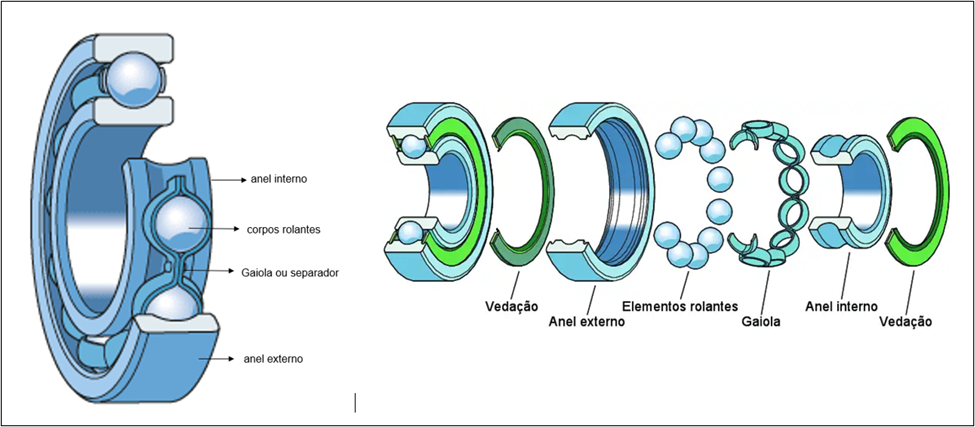
There are various types of bearings on the market (e.g., ball bearings, roller bearings), but they are similar in their main components:
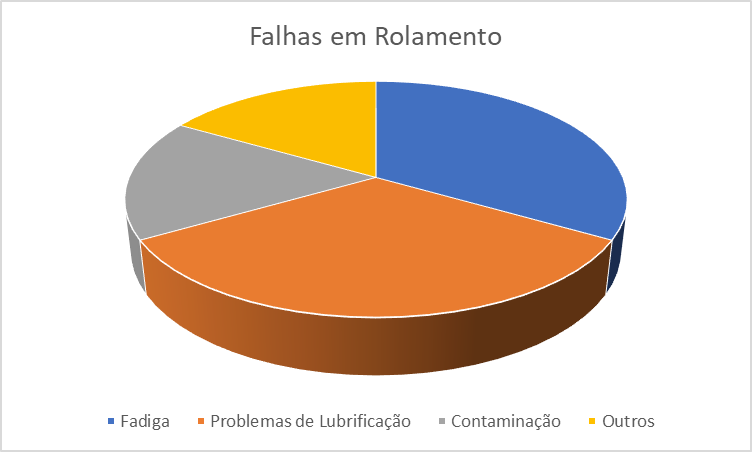
It is no surprise that one of the leading causes of mechanical failures in industry is bearing failure. According to a study by SKF, one-third of these failures are caused by fatigue, one-third by lubrication issues, one-sixth by contamination (ineffective sealing), and one-sixth by other factors.
Vibration analysis is widely used to detect bearing failures, and the “Envelope” technique is one of the most commonly used methods for detecting bearing failures in their early stages.
In this article, we will explain what bearing failure frequencies are and how they are detected through vibration analysis.
How can vibration detection identify bearing failures?
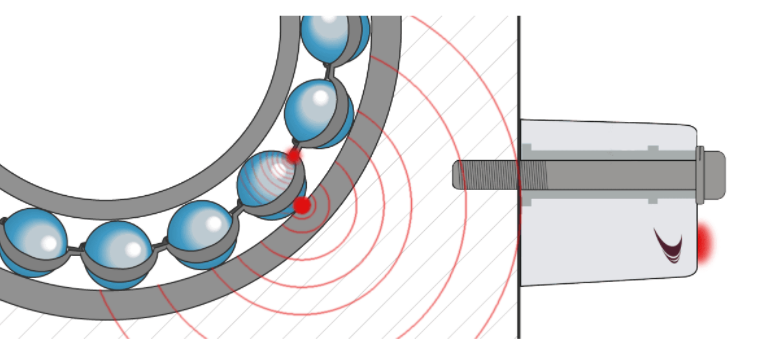
When a bearing is defective (e.g., a crack in the outer ring), a spike will occur at a frequency characteristic of the failure. Let’s look at an example to make this clearer…
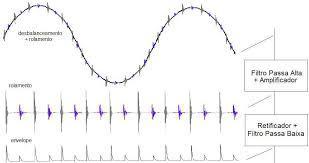
Imagine a bearing with a crack in the outer raceway. Every time the rolling element (ball or roller) passes over this crack, it will cause an impact, resulting in a characteristic vibration:
What is the failure rate for bearings?
There are essentially four frequencies that can be identified in a spectrum to diagnose bearing failure.
BPFI defect – internal track failure rate
BPFO fault – external track failure frequency
BSF defect – failure rate of rolling elements (rollers or balls)
FTF defect – cage failure frequency
Why use the Envelope technique?
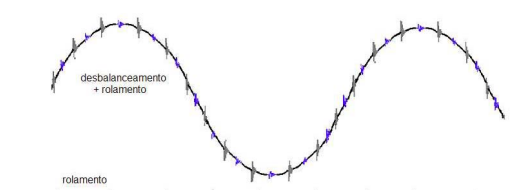
Whenever there is a bearing failure and an impact occurs, the natural frequency of the assembly is excited. This frequency has no relation to the equipment’s rotational speed; it is influenced solely by the system’s stiffness and mass.
In practice, however, the amplitudes of the vibrations caused by bearing failures are small compared to the amplitudes associated with the fundamental frequency and its harmonics.
Thus, in a conventional spectrum, without applying an envelope, it is not possible to identify this type of fault.
Enveloping involves removing low frequencies (e.g., below 500 Hz) and applying an “enveloping” process to the resulting signal.
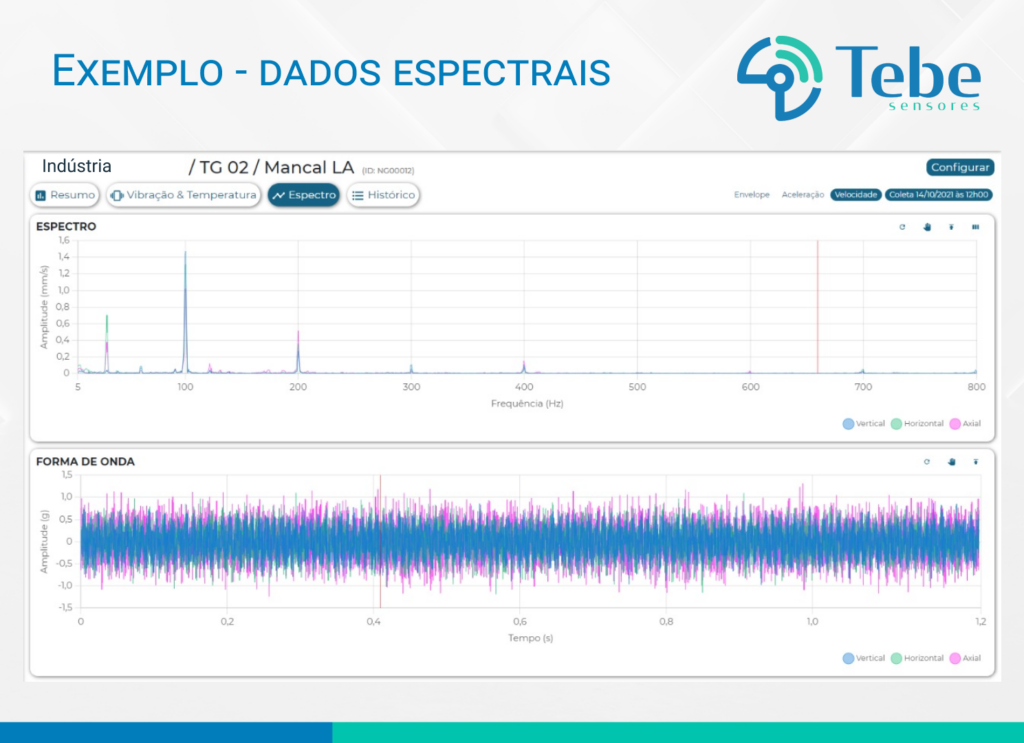
From the IoTebe platform, you can calculate the signal envelope by going to the “Spectrum” tab and clicking “Envelope.” Bearing failure frequencies can also be highlighted by clicking the button in step (3) below:
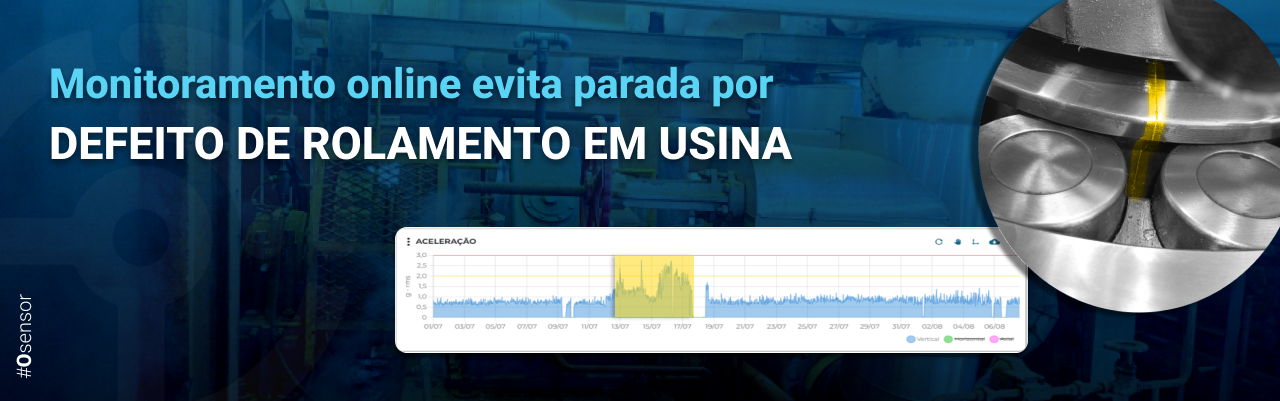
This makes it possible to detect bearing failures at an early stage, allowing for timely intervention to prevent unexpected downtime.